
Photo Frame Ideas: How to Choose & Style Frames for Your Home
Learn how to choose frame styles, sizes, finishes, and gallery-wall combinations that make your photos and art feel beautifully intentional.
Why Your Frame Choice Matters
A beautifully curated home relies on details, and wall decor is one of the most prominent. The right picture frame does more than protect a photo—it acts as a transition between your personal memories and the architecture of your room.
A mismatched or poorly sized frame can flatten even your favorite art print, while a carefully chosen mat and finish can elevate a simple snapshot into a focal point.
How to Choose a Frame Finish
When selecting a frame, look at the existing finishes in your space. Warm wood frames (like walnut or oak) introduce visual warmth and work exceptionally well against cream, beige, or muted green walls. They soften modern interiors and complement traditional spaces.
Matte black frames create strong, defining contrast. They are excellent for anchoring a wall, especially in minimalist, industrial, or monochrome rooms.
Gold or brass frames add an element of elegance. They work beautifully as statement pieces, though it's often best to use them sparingly so they don't compete with other metal fixtures in the room.
Six Frame Styles Worth Considering

Walnut Wood Gallery Frame
Style: Warm & TransitionalWarm, traditional, modern farmhouse, and transitional interiors.
The natural walnut finish introduces a grounding element to the room. The inclusion of a mat board elevates the photograph, making it feel like a custom gallery piece.
A darker wood frame carries more visual weight. It may work better as a standalone anchor piece rather than clustered with heavily competing finishes.

10-Piece Gallery Wall Set
Style: Curated CollectionHallways, large living room walls, and staircases.
This set removes the guesswork from gallery wall planning. Because the frames share a cohesive profile across sizes, it instantly creates a unified aesthetic.
While convenient, standardized sets require you to adapt your art to fit their specific dimensions. You may need to order prints to match the included mat sizes.
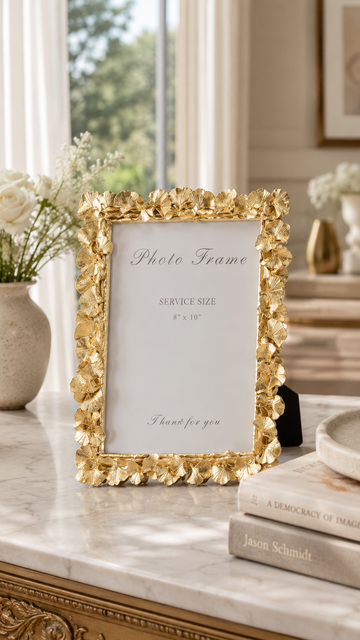
Ornate Vintage Gold Frame
Style: Eclectic EleganceEntryway consoles, mantels, and bedroom nightstands.
A highly textured, ornate gold frame acts as jewelry for a room. It pairs beautifully with vintage portraits or simple black-and-white photography to create high contrast.
This is a statement piece. Surrounding it with too many other ornate objects might make a surface feel cluttered rather than styled.
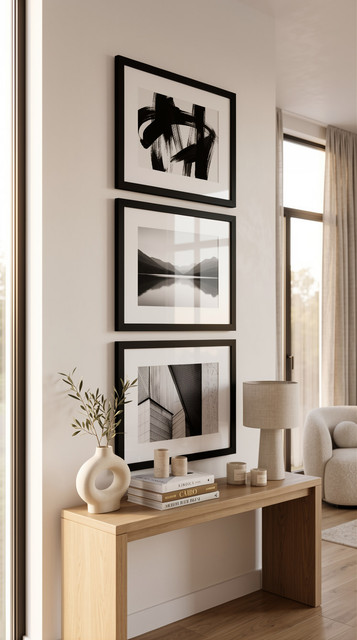
Matte Black Frame Trio
Style: Modern MinimalistHome offices, modern living spaces, and linear wall arrangements.
A slim, matte black border essentially disappears, pulling all visual focus directly to the artwork. Buying in multiples is a budget-friendly way to frame out an entire room cohesively.
These frames prioritize a lightweight, minimal profile, which is excellent for easy hanging but may not offer the heavy feel of solid hardwood frames.

Modern Floating Glass Frame
Style: Airy & ContemporaryPressed botanicals, unconventional art sizes, and spaces needing lighter decor.
By suspending the image between two panes of glass, a floating frame allows your wall color to become the natural border. It’s an elegant solution for non-standard art sizes.
Because the wall color shows through, ensure the art inside contrasts well with the paint behind it so the piece doesn't get lost visually.
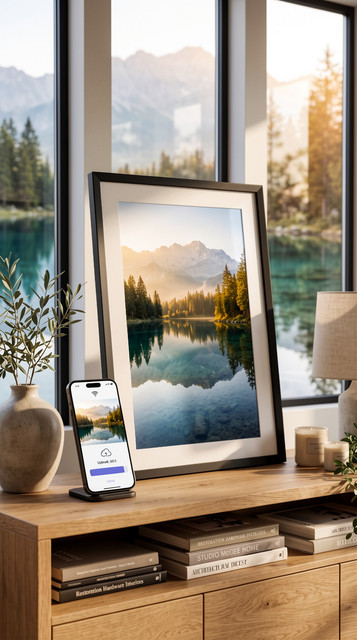
Smart WiFi Digital Frame
Style: Functional TechKitchen counters, living room side tables, and family gifting.
While physical frames are best for permanent decor, a digital frame solves the problem of a rapidly growing photo library. The remote app makes it an excellent shared display.
It requires a power source, so placement is limited to areas near an outlet. It serves more as an interactive album than a piece of traditional wall art.
Common Framing Questions
Not necessarily. While matching frames create a clean, contemporary look, mixing finishes—like pairing a natural wood frame next to a sleek black one—can give a room a collected, personalized feel over time.
A general interior design rule is to hang art so the center of the piece is about 57 to 60 inches from the floor, which is roughly average eye level. If hanging above furniture like a sofa, leave 6 to 8 inches of clearance.
Using a mat board is optional, but it often makes a piece look more polished and professional. Mats provide "breathing room" between the art and the frame, which is particularly helpful for small photos on large walls.